About ParaPride
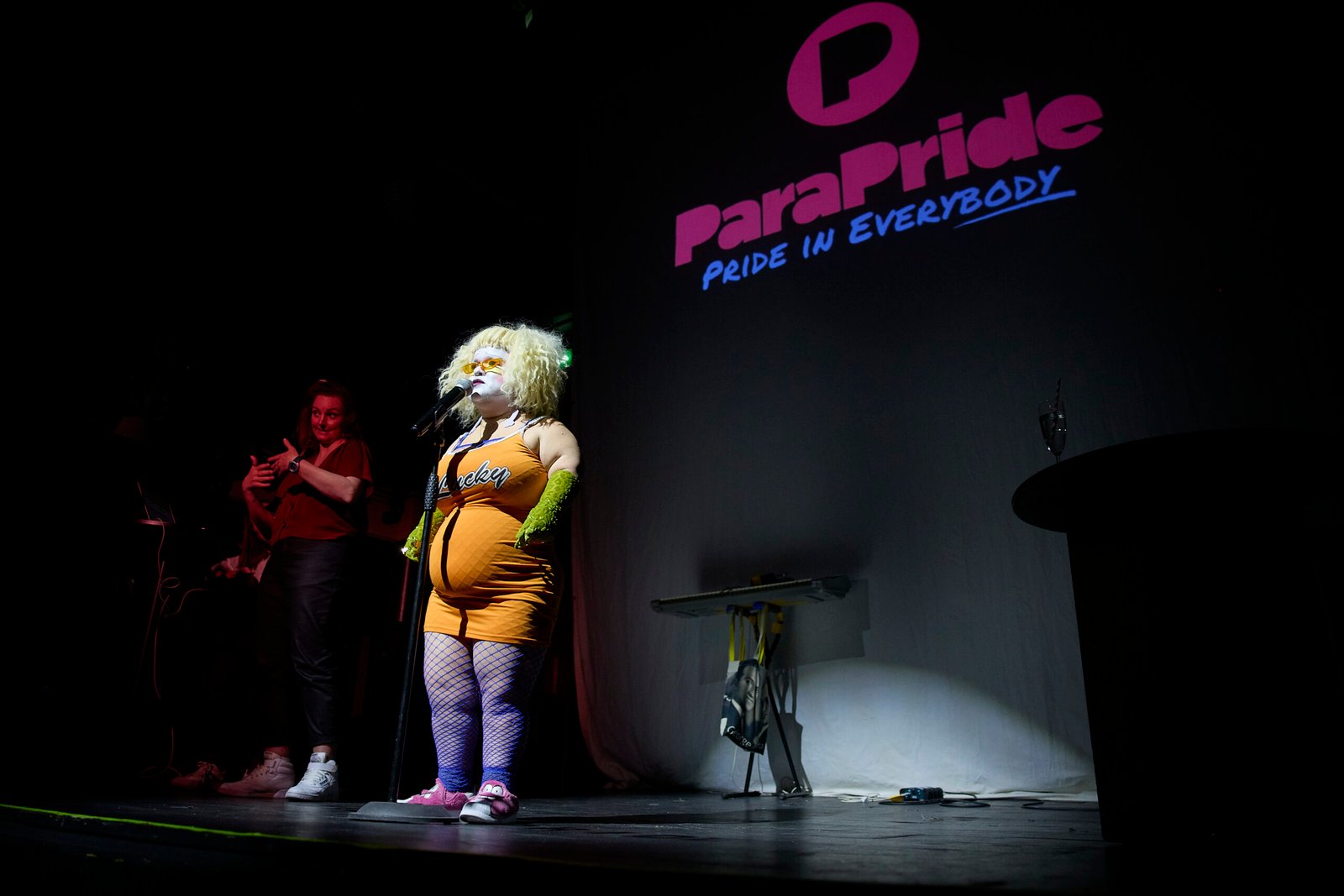
ParaPride exists to address the lack of inclusion for disabled people within the LGBTQ+ community; to provide more accessible LGBTQ+ spaces; and to promote celebration of our different bodies.
ParaPride is built on lived experience
ParaPride is a grassroots empowerment charity that advocates for the visibility, education and awareness of LGBTQ+ disabled people. We exist because of a simple truth: our community has always been here – bold, creative and resilient, and we deserve spaces that reflect that.
ParaPride grew from a recognition that disabled people are too often left out of LGBTQ+ spaces, and that LGBTQ+ identity is too often overlooked within disability communities. We started with a need to address the lack of inclusion for disabled people within the LGBTQ+ community, to create more accessible spaces, and to promote body positivity – celebrating all bodies, in all their forms.
“We do not want to be defined by our disabilities. We are only disabled by the barriers presented by society.”

The importance of ParaPride’s mission
Being LGBTQ+ and disabled can feel profoundly isolating. Alongside the prejudice and discrimination that each identity can bring separately, people at this intersection face access barriers that prevent full participation in community life. LGBTQ+ spaces can feel unwelcoming because of disability. Disability spaces can feel alienating because of sexual orientation or gender identity.
Despite this, there are still no consistently accessible spaces in the UK specifically for LGBTQ+ disabled people to socialise, explore their identity and find genuine community. Given that as many as 40% of LGBTQ+ people are disabled, that gap is urgent – and it needs to change.
“Our community has always existed. We are bold, creative and resilient.”
We want every LGBTQ+ disabled person to feel pride in who they are.
Get involved
ParaPride’s mission addresses a stark lack of visibility and education around people who sit at the intersection of being disabled and LGBTQ+.
We work to educate wider society on making venues and public spaces more inclusive – and we provide a safe platform where LGBTQ+ disabled people can connect, be heard and feel proud of who they are.